Key planning information for oophorectomy in Turkey.
$2,500 fromLowest listed price
1–4 hrsProcedure time
1–5 daysHospital stay
7 hospitalsList oophorectomy
Oophorectomy in Istanbul is listed from US$2,500 to US$3,500 at 7 hospitals. The operation takes 1 to 4 hours, with 1 to 5 days in hospital. Each hospital quotes its own price for your case.
Prices last updated Nov 2026
Cost of Oophorectomy in Turkey
Table of prices by type of procedure, in US$. Each hospital quotes its own price for your case.
Procedure
Minimum price
Maximum price
Oophorectomy
$2,500
$3,500
Price starting from $2,500 up to $3,500 · last updated Nov 2026.Final prices are quoted by each hospital
Hospitals and clinics offering Oophorectomy in Istanbul
Oophorectomy is listed by 7 hospitals in Istanbul. The order reshuffles every hour so each gets equal exposure.
Florence Nightingale Hospital, founded in 1989, is a leading hospital network in Europe and the Middle East. It pioneered the region's first robotic surgery and liver transplant. Florence Nightingale operates four hospitals, treating over 300,000 patients annually.
Our hospital is a leading medical facility in Turkey, with highly specialized doctors, advanced technology, and 40+ procedures. Our facility has 200 beds, 81 doctors, and 50 ICU units. We prioritize patient well-being with VIP services, including hotel stays, checkups, and transportation. Our focus
Liv Hospital is the only institution in Turkey co-authorized Center of Excellence Accreditation in colorectal surgery, robotic surgery and bariatric surgery by the Surgical Review Corporation (SRC) and provides advanced technology and treatments to its international patients with its 159 bed capacit
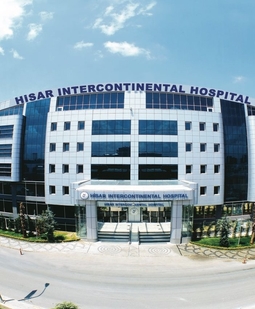
Hisar Intercontinental Hospital is a JCI accredited facility that provides the highest quality of care for all its patients. The hospital is one of Turkey’s largest private hospitals and utilizes the best and most up-to-date technologies in its 170 bed facility.
Kadıköy Florence Nightingale Hospital provides services in all specialties with its inpatient and outpatient, diagnosis, treatment and emergency service facilities and fully-equipped polyclinics.
What is Oophorectomy?
Oophorectomy is a surgical procedure to remove one or both ovaries. Oophorectomy is used as a treatment for pelvic diseases like ovarian cancer. It may also be recommended if ovarian hormones may be the cause of breast cancer and severe endometriosis. If ovaries are removed to reduce chances of developing ovarian cancer in future, it is known as prophylactic oophorectomy.
Types of Oophorectomy:
Unilateral Oophorectomy:
The removal of one ovary is called unilateral oophorectomy. After a unilateral oophorectomy, a woman will still menstruate and can have children.
Bilateral Oophorectomy:
The removal of both the ovaries is known as bilateral oophorectomy. After a bilateral oophorectomy, a woman will stop menstruating and will not be able to have children.
Surgical methods used for Oophorectomy:
Oophorectomy may be performed either by laparotomy or by a laparoscopic method.
Laparotomy: Laparotomy is most often used in cases of cancer, where the surgeon needs to get a clear view of the abdominal cavity and tissues that surround it.
During a laparotomy, a long vertical or horizontal incision is made on the patient’s abdomen below the navel.
The surgeon stretches apart the abdominal muscles to reveal the ovaries.
The blood vessels are tied to avoid bleeding and then the ovaries are removed.
The incision is closed with stitches or staples.
Laparoscopic Oophorectomy:
In a laparoscopic oophorectomy, a laparoscope is inserted through a tiny incision near the navel. A laparoscope is an endoscopic tube with a camera and light attached to it, which enables the surgeon to view the pelvic organs.
Other tiny incisions are also made through which surgical instruments are inserted to detach the ovaries.
A tiny incision at the top vagina is made to remove the ovaries.
The ovaries may also be divided into smaller segments and removed.
The incisions are closed with stitches.
How to prepare for Oophorectomy?
The patient is required to do some blood and urine test, and will be physically examined by the doctor.
Ultrasound, CT scan and X-ray may also be recommended.
The patient is interviewed by an anesthesiologist to determine the type of anesthesia that will be used.
If the surgery is anticipated to be extensive, a colon preparation may be done.
The patient may be required to stop taking certain medication a week before the surgery.
About Oophorectomy
Key facts to plan your treatment: how long it takes, your hospital stay, anaesthesia, risks and recovery.
Duration of surgery/treatment
1 to 4 hours
Days admitted
1 to 5 days
Anesthesia
Regional or General Anesthesia
Recovery
- During hospitalization, the patient is first instructed to sit up and walk for a while.
- In the following morning, intravenous tubes will be removed if the patient starts eating and drinking normally.
- The patient may be required to wear special socks to prevent clotting.
- A catheter may be used to help the patient urinate.
- The patient may feel some discomfort after the surgery. Antibiotics may be provided to prevent an infection.
- If both ovaries are removed, the patients who are not affected by cancer may start hormone replacement therapy.
- The patient may require 2 to 6 weeks to fully recover from the surgery.
Risks
The risks involved in oophorectomy are rare. Complications that occur arise from hormonal effects of the surgery. These risks include:
- Premature death
- Heart diseases
- Parkinson’s disease
- Dementia
- Osteoporosis
- Psychological problems
- Sexual dysfunction
Risks related to surgery are
- Reaction to anesthesia
- Bleeding
- Clotting
- Injury to other organs
- Infection
After care
- The patient should follow the doctor’s instructions carefully.
- The incision area should be dressed properly to prevent an infection.
- The patient is advised to take showers instead of baths.
- The patient should follow a low fat diet rich in fruits and vegetables, with an adequate intake of calcium.
- The patient should drink plenty of water and eat high fiber food to avoid constipation.
- The patient is required to get plenty of exercise after recovery to prevent heart and bone diseases.
- Chemotherapy may be started for patients with cancer.
- Patients who are affected by psychological trauma after the surgery may be required to get counseling.
The doctor should be informed if the following symptoms occur:
- Fever and chills
- Severe vaginal bleeding or discharge
- Severe pain that is not controlled by medicines
- Nausea and vomiting
- Infection, swelling and bleeding from the incision area
- Urinating difficulty
- Leg pain, swelling or redness
- Coughing
- Chest pain and breathing difficulty
- Depression
Ready to compare oophorectomy hospitals in Istanbul?
Choose a hospital and send your enquiry to its international patient team. Each replies with its own price and plan.
 Private Hospital

 Private Hospital Group
 Private Hospital
 Private Hospital
 JCIPrice on request
 Private Hospital
 Private Hospital
 ISOPrice on request
 Private Hospital